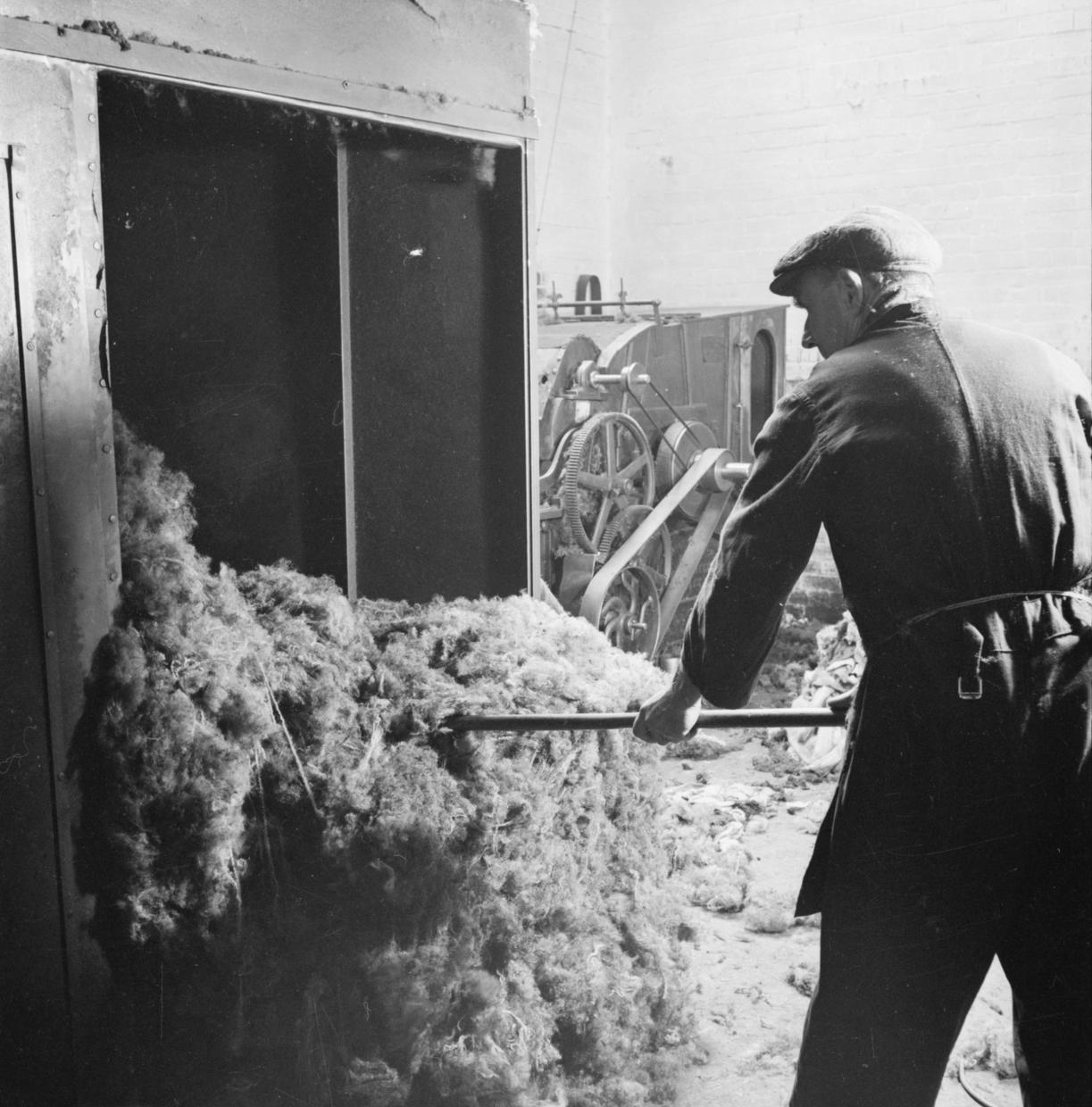
Nobody wanted them.
WEER started in 2021 in a warehouse on Keileweg, with a rented shredder and a stack of t-shirts that nobody had bought.
There are seven of us now, a spinning room, and one rule: we do not buy new fibre. Everything in this building arrived as a shirt somebody already owned. This page is the whole story, including the parts that took longer than we wanted.
Joost Marseille
WEER began because a warehouse on Keileweg was full of t-shirts nobody wanted and I could not think of a good reason to throw them away. Not a noble reason. I simply did not want to pay for the skip.
A textile engineer named Rafal explained that a t-shirt is mostly cotton, and cotton can be cotton again. We bought a shredder, and for a year we made a grey, slightly ugly jersey that nobody would wear. Then we learned to sort, to blend, to control the weight, and it became a shirt.
Every claim on this site comes from our own records: the shirts we counted, the kilos we weighed, the days it took. Where we do not know, the site says so. That is the whole business, honestly told.
The name is Dutch. Weer means again. It seemed the right word for a company whose entire product is a second chance, and short enough to print on the label.
Joost Marseille
How we got here
- 2021Two hundred shirts nobody wanted, a rented shredder and a workshop on Keileweg.
- 2022First spin. Forty kilos of reclaimed cotton into a jersey we could actually knit.
- 2023WEER Loop opens. Four hundred shirts collected in the first year.
- 2024A purpose-built sorting floor. Nine part-time roles, all within walking distance.
- 202514,800 shirts collected. The cap, our first product made only from offcuts.
- 2026A second mill partner in Barcelos. The same yarn, twice the capacity.
What we do not do
Most of what gets sold as sustainable is a claim with a leaf on it. These are the four we keep turning down.
- No bamboo, no viscose, no 'eco' fibre
- Everything we make is cotton that was once a shirt. We would rather make less of it well.
- No charity tees priced to guilt you
- Money moved to a cause is not a reason to buy a shirt. If we fund something, we will say so and say how much.
- No polyester in a recycled cotton blend
- Polyester is not the problem. Blending it in so a shirt lasts longer is a different question, and we answered it by knitting heavier.
- No carbon-neutral claim we cannot measure
- We publish the numbers we can stand behind. Where we do not know, we say we do not know.
Our own numbers
- 14,800
- shirts collected since 2021, and counted
- 92%
- of our fibre comes from within 150 km of Rotterdam
- 4
- old t-shirts go into every new body
- 0
- virgin cotton, and no polyester blends
- 9,240 kg
- of textile waste kept out of incineration in 2025
- 19 days
- from the collection point to your door
Counted from our own records: the shirts that came through the door, the kilos on the scale, the days on the calendar. We publish the method with the number if you ask for it.
Seven pieces, made from shirts you already own.